Renovation or Knockdown Rebuild?
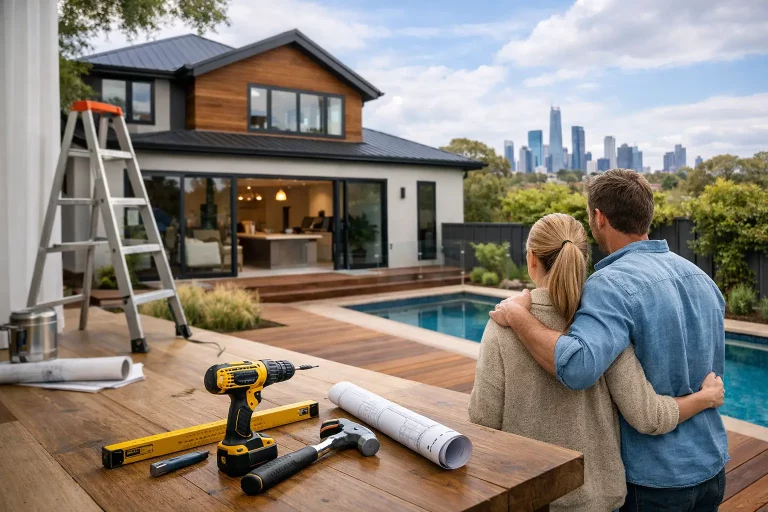
Standing in an ageing home with a growing list of problems, the question gets real pretty quickly – renovation or knockdown rebuild? For a lot of Melbourne homeowners, it starts with one issue, like a cramped kitchen or a leaking bathroom, then turns into a bigger decision about whether the house is still worth working with at all.
There is no one-size-fits-all answer here. The right choice depends on your block, your budget, the condition of the existing structure, council controls, and how long you plan to stay. What matters most is making the decision with clear eyes, not just emotion or rough online cost estimates.
How to decide: renovation or knockdown rebuild
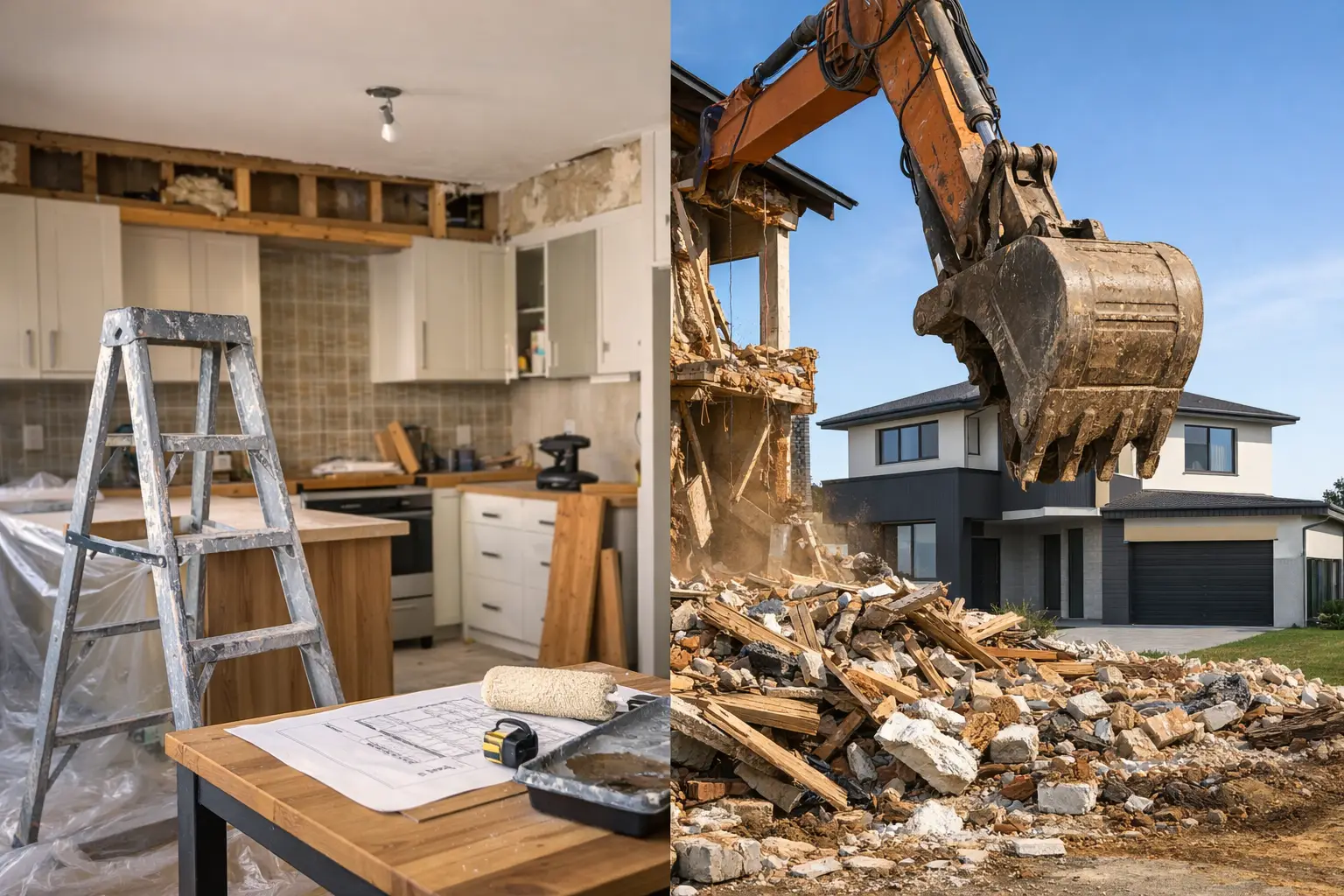
A renovation usually makes sense when the bones of the home are solid and the layout can be improved without fighting the structure at every step. If the house has good character, a workable footprint, and only needs targeted changes to suit the way you live now, renovating can deliver strong value.
A knockdown rebuild starts to look better when the home is fundamentally holding you back. That might mean poor orientation, low ceilings, major structural issues, outdated services, or a floor plan that cannot be fixed without effectively rebuilding half the house anyway. At that point, spending heavily to rescue a compromised home can be harder to justify.
The key is not just comparing upfront cost. You need to compare what you get at the end.
When renovation is the stronger option
Renovation often wins when you already have a house in the right location, on the right block, and with enough of the existing structure worth keeping. That is especially true if you are improving kitchens, bathrooms, living areas or adding an extension to create more space without wiping the site clean.
It can also be the better path if you want to preserve period details or keep the street appeal of an established home. In many suburbs, the existing character of a house adds to its charm and value. If those original elements are in good nick, working with them can produce a better result than replacing them.
There is also less disruption to the planning side in some cases. Not always, but often a well-planned renovation avoids some of the complexity that comes with a full rebuild. If your changes fit within the right approvals and the project is properly scoped from the start, you can improve how the home functions without starting from zero.
When knockdown rebuild makes more sense
Sometimes the existing house has simply reached the point where patching and extending no longer stacks up. You open walls and find structural movement, outdated wiring, poor insulation, uneven floors and plumbing that should have been replaced years ago. The budget starts growing, but the end product still carries the limitations of the old house.
That is where a knockdown rebuild can be the smarter long-term move. You get the chance to design a home around how you live now, not how people lived 40 or 50 years ago. You can improve orientation, storage, ceiling heights, natural light and energy performance from day one.
For families planning to stay put, that matters. A well-designed rebuild can give you a cleaner result, fewer maintenance issues and a home that performs better over time.
Cost is important, but value matters more
A lot of people frame this as a simple cost comparison. Renovating looks cheaper on paper, so it feels safer. Sometimes it is. Sometimes it is not.
Renovation costs can blow out when the scope is unclear or hidden issues appear once demolition starts. Older homes have a habit of revealing surprises at exactly the wrong moment. Rotten timbers, non-compliant past work, asbestos, drainage issues and uneven subfloors can all add cost fast.
A knockdown rebuild usually has a bigger upfront number, but it can offer more certainty if the planning, documentation and site conditions are understood early. You are also comparing that cost against a fully new home, with new materials, new systems and fewer compromises.
The smarter question is this: if you spend the money, what are you actually getting? A renovated home that still has awkward rooms and ageing services may not represent better value than a rebuild that solves everything in one go.
Watch the cost of partial fixes
One of the most expensive paths is doing major renovation work in stages without an overall plan. A family might redo a bathroom, then later move walls, then add an extension, then revisit flooring or windows because the earlier work no longer fits. That creates double handling, wasted spend and unnecessary disruption.
Whether you renovate or rebuild, the better approach is to look at the property as a whole. Understand what needs to happen now, what can wait, and what will affect future work.
The block and the house both matter
The decision is not only about the building. Your land plays a big role.
If you have a well-positioned block in a location you love, keeping and improving what is there can make good sense. If the house sits well on the site and an extension can capture better light or open up the backyard, renovation becomes more attractive.
But if the existing home is poorly placed on the block, a rebuild gives you the chance to start again properly. You can design for access, outdoor connection, garaging, privacy and solar orientation in a way the current house never allowed.
This is where site-specific advice matters. A solution that works on one suburban block may be completely wrong for another, even with a similar house.
Planning, permits and timeframes
Neither option is as simple as people hope. Both require proper planning, realistic budgets and the right team around you.
Renovations can look straightforward from the street and still be quite involved behind the scenes. Structural changes, extensions and wet area upgrades all need careful coordination. Matching old and new construction can also take more skill than people expect.
Knockdown rebuild projects come with their own approval and design process, plus demolition, site preparation and a full construction program. Depending on the site and local requirements, that can take time.
If speed is your main driver, the answer is not always obvious. A smaller, well-defined renovation may move faster than a rebuild. A complicated renovation with lots of unknowns may not. Timeframes come down to scope, approvals, selections and how well the project is managed.
Lifestyle disruption is real
Homeowners often focus on dollars and forget to account for daily life.
A renovation can allow you to stay in part of the home during some stages, but that is not always comfortable or practical. Living around trades, dust, noise and restricted access wears people down, especially if kitchens or bathrooms are out of action.
A knockdown rebuild usually means moving out entirely, which adds rent or temporary accommodation costs. But it can also create a cleaner break. Rather than living through months of piecemeal works, you step away and return to a finished home.
Neither option is stress-free by default. Good communication, honest advice and clear project management make a big difference either way.
Renovation or knockdown rebuild for long-term resale
If resale matters, think beyond personal taste. Buyers notice layout, light, storage, street appeal and build quality more than flashy finishes alone.
A smart renovation can absolutely lift value, especially when it improves the parts of the home people use every day. A functional kitchen, better indoor-outdoor flow, an extra bathroom or a properly designed extension can change how a house is perceived in the market.
A rebuild can also deliver strong resale appeal, particularly if the finished home suits the area and the block. But overcapitalising is a real risk if the design and spend are well beyond what the location supports.
This is another area where restraint matters. The best result is usually not the biggest job. It is the one that fits the property, the street and your goals.
The best decision starts with an honest assessment
If you are weighing up renovation or knockdown rebuild, start with facts. Get a proper assessment of the existing structure. Understand what can realistically be retained, what needs replacing, and what your budget delivers under each path.
That process should be grounded, not salesy. A good builder or renovation specialist will tell you when a house is worth saving and when it is not. They should also be upfront about trade-offs, likely risks and where your money will have the strongest impact.
For many homeowners, the answer becomes clearer once the emotion is stripped out. You are not choosing between old and new in the abstract. You are choosing the most practical way to get a home that works, lasts and feels right for the next stage of life.
If the house still has something solid to build on, renovation can be a smart move. If the site is good but the home is fighting you at every turn, starting fresh may be the better investment. The right path is the one that gives you fewer compromises when the work is done.