
Residential Builder Carpentry Packages Explained
A build rarely goes off the rails because of one big dramatic mistake. More often, it’s the small gaps that cause the grief – trades arriving without the right information, handovers that aren’t clean, or carpentry scopes split across too many crews. That’s why residential builder carpentry packages matter. When the scope is planned properly from the start, builders get better continuity, clearer accountability and fewer avoidable delays.
For residential builders, the appeal is simple. Instead of chasing separate carpentry teams for frames, lock-up, fix and fit-out, a packaged approach brings those stages under one roof. That can mean tighter programming, more consistent workmanship and fewer issues getting lost between subcontractors. For homeowners doing a major renovation or extension, it can also mean a smoother experience because the work is managed as one connected scope rather than a series of disconnected jobs.
What residential builder carpentry packages actually include
The term gets used broadly, so it helps to pin down what a package usually covers. In most residential and multi-residential projects, residential builder carpentry packages are built around the key structural and finishing stages of the job.
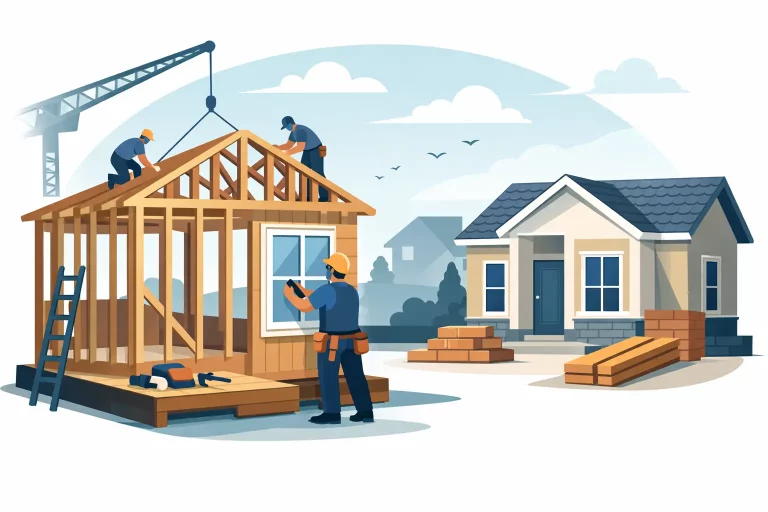
Framing is the obvious starting point. That includes wall frames, trusses, floor systems and structural carpentry required to get the shell up accurately and on programme. If the frame is out, every trade after it feels the pain, so this stage is about more than speed. It needs precision, coordination with plans and clear communication with site management.
Lock-up generally follows, with external doors, windows, cladding support, eaves, soffits and other works that help close the building in. Depending on the project, that scope can vary. A custom home and a townhouse development may both be labelled lock-up, but the details, sequencing and access issues can be very different.
Fix carpentry takes the job inside. This is where skirtings, architraves, internal doors, stairs, shelving and trim work come into play. It’s a stage that quickly reveals whether the team doing the work cares about detail. Small inconsistencies become very visible once the paint goes on.
Fit-out extends into the final layer of practical and visual finish. That might include cabinetry installation support, wall linings, feature timber elements, detailed joinery-related carpentry and other finishing works that shape how the completed home feels to live in. On renovation and extension projects, this stage often requires more problem-solving because existing structures are rarely as straight or predictable as new builds.
Why builders prefer packaged carpentry scopes
From a builder’s point of view, the biggest advantage is control. Not control in the sense of micromanaging every cut, but control over delivery, sequencing and responsibility. When one carpentry partner handles a broader scope, it becomes easier to coordinate site activity and keep momentum across the build.
There’s also a quality benefit. Different crews can all be competent, but if they work to different standards or interpret drawings differently, the finished product can feel inconsistent. A package approach reduces those handover points. The team framing the job understands how later stages will sit, and the crew completing the fix-off isn’t walking into a shell built by someone with a completely different standard of workmanship.
Communication is another major factor. Site managers and developers don’t want to spend their week repeating the same brief to multiple subcontractors or sorting out who owns a problem at the edge of two scopes. A well-run package gives them one point of contact and one team expected to follow through.
That said, bigger packages are not automatically better. If a contractor takes on too much without the labour, systems or supervision to support it, the package becomes a liability. The value is not in bundling for its own sake. The value is in having a capable team that can genuinely deliver across the full scope.
What to look for in residential builder carpentry packages
The first thing to check is scope clarity. Good packages are specific. They spell out inclusions, exclusions, assumptions and staging. Vague wording might look flexible at tender time, but it often leads to disputes once the job starts moving.
The second is capacity. A carpentry contractor might do excellent work on a single custom home but struggle on a fast-moving multi-unit site. Ask whether the team has the labour, supervision and scheduling systems to match your type of project. This matters just as much as trade skill.
You also want to know how they handle changes. Variations are part of building. The issue is not whether they happen, but whether they are communicated early, priced fairly and managed without turning the programme into a mess.
Past performance matters too, especially on jobs that resemble yours. A contractor who works comfortably across high-detail residential builds, renovations and larger developments is usually better equipped to adapt when site conditions shift. That breadth can be particularly valuable in Melbourne’s south-east, where builders often work across mixed project types and varied site constraints.
Packages for new builds versus renovations
Not every carpentry package should be structured the same way. New builds are typically more predictable. Drawings are clearer, access is easier to plan and sequencing follows a cleaner path. That makes it easier to package broad scopes with confidence.
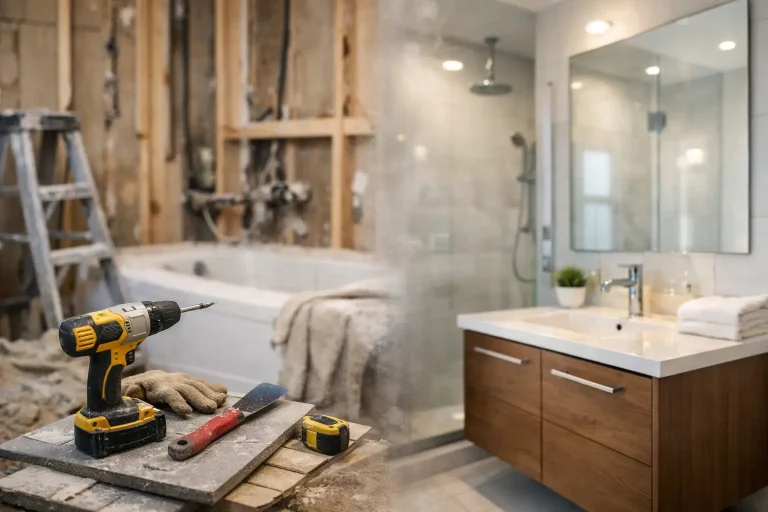
Renovations and extensions are different. Existing walls are not always straight, older homes can hide structural surprises and clients often make practical changes once they see the work taking shape. In that setting, carpentry packages need some flexibility built in. The core scope should still be defined properly, but the team also needs the experience to respond sensibly when the house reveals something the plans didn’t.
For homeowners, this is where professionalism really shows. A good carpentry team won’t make every site challenge your problem. They will explain what’s been found, outline the options and keep the work moving with as little disruption as possible.
Why the cheapest package can cost more
Price matters. Every builder watches margins, and every homeowner has a budget. But carpentry packages should be judged on value, not line-item cheapness.
A low quote can hide missing scope, weak supervision or unrealistic allowances on labour and timing. That may not be obvious at contract stage. It becomes obvious later, when the frame takes longer than promised, defects start appearing in the fix stage, or the contractor is suddenly hard to reach.
There is always a balance to strike. Premium pricing without proof is no better than bargain pricing with holes in the scope. The aim is to work with a team that prices clearly, understands the build sequence and can back up its promises with reliable delivery.
That’s one reason many builders prefer long-term trade partners over one-off hires. When the relationship is solid, both sides understand expectations, communication is faster and fewer issues need to be reinvented on every job.
A good package is about follow-through
Plenty of contractors can talk about craftsmanship. Fewer can combine workmanship with the practical side of delivery – turning up when expected, coordinating with other trades, responding quickly and keeping the site manager informed. Residential builder carpentry packages only work well when those basics are taken seriously.
This is where an end-to-end carpentry partner stands apart from a crew that only wants isolated tasks. If the team is committed to the full build journey, from frame through to fit-out, they tend to think ahead. They are not just trying to finish today’s scope. They are considering how their work affects the next stage and the finished result.
That mindset is useful for homeowners as well. On a kitchen renovation, extension or structural upgrade, the best outcomes come from trades who treat the work as part of a bigger plan rather than a quick transaction. Scotia Construction has built its reputation around exactly that kind of dependable delivery – quality work, reliable people and results that hold up.
When you’re assessing carpentry packages, look beyond the headline scope and ask a more practical question: will this team make the build easier or harder to deliver? If the answer is easier, clearer and more dependable, you’re probably looking at the right fit. Good carpentry should do more than fill a trade slot – it should help the whole project run properly.