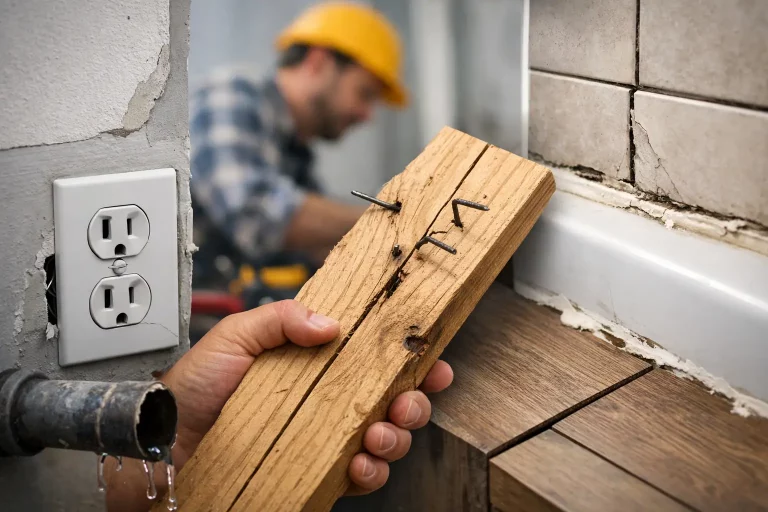

Bathroom Renovation Carpenter: What They Do
A bathroom can look simple on the surface. Tiles, tapware, vanity, shower screen. But once the old room is stripped out, the quality of the result often comes down to what sits behind it all. That is where a bathroom renovation carpenter matters. If the framing is out, the floors are uneven, or the layout has not been properly prepared, every trade that follows is working around avoidable problems.
For homeowners, that usually means delays, budget creep and finishes that never feel quite right. For builders, it means lost time on site and more coordination than the job should need. Good carpentry keeps the renovation moving and gives the rest of the build a solid base.
What a bathroom renovation carpenter actually does
A lot of people assume carpentry in a bathroom starts and ends with fitting off a vanity or fixing a door jamb. In reality, the role is broader than that, especially when the renovation changes the room layout or involves structural work.
A bathroom renovation carpenter prepares the space so waterproofing, tiling, plumbing and electrical work can be done properly. That can include demolition support, wall and ceiling framing, floor corrections, noggins for fixtures, structural adjustments, door openings, trim work and fit-out details. In older homes, it can also mean dealing with timber movement, out-of-square walls or hidden damage once linings come off.
This is why carpentry is not just a finishing trade in a bathroom renovation. It often sits near the start of the job and influences almost every stage after it.
Why carpentry matters so much in bathroom renovations
Bathrooms are tight spaces with very little room for error. A few millimetres out in a living room might go unnoticed. In a bathroom, the same issue can throw off tile lines, leave gaps around cabinetry, affect shower falls or create headaches when screens and mirrors are installed.
That is one reason experienced builders pay attention to the carpentry package early. The other is sequencing. If the framing and substrate preparation are done well, other trades can step in and do their work without spending half the day fixing what should have already been sorted.
For homeowners, the value is a bit different but just as important. Good carpentry helps the room feel finished in the way people actually notice – doors closing properly, vanities sitting square, trims lining up, fixtures feeling solid and the room making sense as a whole. It is the difference between a renovation that looks good in photos and one that performs properly every day.
Where a bathroom renovation carpenter adds the most value
Layout changes and structural adjustments
If you are moving walls, changing the position of a doorway or opening up space, carpentry is central to the job. Even small layout changes can affect wall framing, sheeting support and how plumbing and electrical services are run.
In some renovations, especially in older Melbourne homes, the bathroom upgrade is tied to a bigger improvement plan. That might involve reworking adjoining rooms, increasing storage or shifting the entry to improve flow. Those changes need more than patch-up work. They need proper carpentry planning so the renovation feels intentional rather than pieced together.
Fixing what is uncovered after demolition
This is where experience counts. Once tiles, sheeting and fixtures are removed, you may find water damage, rotten timber, poorly done past work or framing that was never straight to begin with. A capable carpenter can assess what needs replacing, what can be reinforced and what should be corrected before the room is rebuilt.
Not every issue becomes a major cost blowout, but ignoring hidden problems almost always makes the finish worse. The right approach is practical – fix what affects safety, durability and finish quality, and do it before the next trade starts.
Supporting fixtures and finishes
Bathrooms rely on solid fixing points. Wall-hung vanities, recessed shaving cabinets, shower screens, towel rails and accessories all need proper support. That usually means adding noggins and framing in the right place before the walls are closed up.
It is a small detail that has a big effect. If support is missed at the rough-in stage, installation becomes harder later and the result can feel second-rate.
Bathroom renovation carpenter or general handyman?
This is where many projects go off track. A handyman might be suitable for minor maintenance or small repairs, but a bathroom renovation usually involves multiple trades, strict sequencing and no shortage of hidden variables. Carpentry in that setting needs to be accurate, coordinated and done with the rest of the renovation in mind.
A bathroom renovation carpenter works as part of the build process, not just as someone who patches and installs. They understand set-out, tolerances, substrate preparation and how their work affects waterproofing, cabinetry and final fit-off.
That does not mean every bathroom needs a large team or a high-end scope. It means the carpentry should match the level of the renovation. If you are investing in new tiles, quality fixtures and a better layout, it makes little sense to cut corners on the trade work that supports all of it.
What to look for when hiring a bathroom renovation carpenter
Start with reliability. Bathrooms are schedule-sensitive jobs. A carpenter who turns up late, disappears mid-project or leaves loose ends for other trades creates pressure quickly.
Then look at scope. You want someone who can do more than basic fix carpentry if the job calls for it. Ask whether they handle framing adjustments, structural carpentry, fit-out work and renovation coordination. The answer will tell you how much support they can really provide once the room is opened up.
Communication matters just as much as workmanship. Homeowners want clear advice, realistic timeframes and a straightforward explanation of what is happening on site. Builders want trades who can integrate without needing constant supervision. In both cases, the best carpenters are the ones who identify issues early and deal with them properly.
A strong track record helps too. You are not just looking for neat finishes. You are looking for evidence that the team can deliver under renovation conditions, where no two bathrooms are exactly the same.
For builders, carpentry quality protects the whole job
On builder-led projects, bathroom carpentry is not just about the room itself. It affects programme, trade flow and client satisfaction. If framing is wrong or set-out is careless, the impact spreads quickly across waterproofing, tiling, glazing and joinery.
That is why dependable carpentry subcontractors are valuable on renovation and multi-stage residential work. They keep to programme, understand site expectations and complete the scope without creating avoidable defects. When a team can cover structural adjustments, framing and fit-out with the same standard of care, site management becomes easier.
For builders working across Melbourne’s south east, that consistency matters. Renovation projects often run in occupied homes, with tighter access and less margin for site disruption than new builds. A trade team that communicates well and leaves the site in good order is not a luxury. It is part of getting the project delivered properly.
Why the cheapest option often costs more
Bathrooms are one of the most expensive rooms in the house to redo. Once waterproofing, tiling and fit-off are complete, going back to correct poor carpentry is disruptive and costly.
The cheaper quote can look attractive at the start, especially if the visible scope seems similar. But bathroom carpentry is full of details that do not always show on a basic estimate – levelling floors, straightening walls, replacing damaged timbers, adding supports, adjusting openings and getting the room ready for the trades that follow.
If those steps are skipped or rushed, you usually pay one way or another. Sometimes it is in variations. Sometimes it is in delays. Sometimes it is in a finished bathroom that never feels as sharp or solid as it should.
The best results come from coordinated trades
A bathroom renovation carpenter does their best work when the project is planned as a whole. Good outcomes come from proper sequencing, clear communication between trades and a team that understands the final goal from day one.
That is where an experienced renovation company has an edge. Instead of treating carpentry as a disconnected piece of the job, it becomes part of an organised process. For clients, that means fewer surprises and a cleaner path from demolition to handover. For builders, it means less chasing and better control over delivery.
At Scotia Construction, that approach is simple: quality work, reliable people, real results. Whether the project is a bathroom refresh or part of a larger renovation, the carpentry should make the rest of the job easier, not harder.
If you are planning a bathroom renovation, pay attention to the trade work you will not see once the room is finished. The tiles and fittings get the attention, but the carpentry underneath is often what decides whether the space still feels solid and well-built years later.