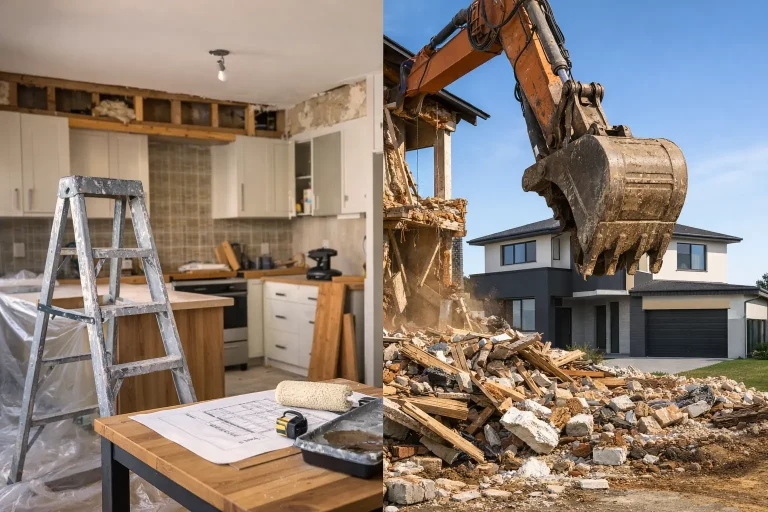

Guide to Managed Home Renovations
A renovation usually goes off the rails long before the first wall is opened up. It happens when the budget is loose, the scope keeps shifting, trades are booked in gaps, or no one is clearly responsible for the whole job. That is exactly why a guide to managed home renovations matters. Good renovation management does not just keep things moving. It protects your budget, your timeline and the quality of the finished work.
For most homeowners, the real goal is not just a new kitchen, bathroom or extension. It is getting from the old space to the finished result without weeks of confusion, blown costs and constant chasing. A managed renovation is built around that idea. It brings planning, sequencing, communication and site control into one process, so the project is not left to chance.
What managed home renovations actually mean
Managed home renovations are not simply renovations completed by a builder. The difference is in how the project is run. Instead of the homeowner coordinating designers, trades, suppliers and timelines, that responsibility sits with a team that oversees the process from start to finish.
That matters because most renovation problems are not caused by one bad trade. They come from poor coordination. The plasterer arrives before the electrical rough-in is finished. Joinery measurements are taken before walls are straight. A tile selection is delayed and the whole bathroom program slips. When no one is managing these moving parts properly, costs rise and frustration follows.
A managed approach brings structure to the job. Scope is clarified early, decisions are made in the right order, trades are sequenced properly and communication stays consistent. For homeowners, that usually means fewer surprises and less day-to-day stress. For builders working with subcontracted carpentry teams, it means better reliability on site and a cleaner handover between stages.
A practical guide to managed home renovations
The first step is getting clear on what you are actually trying to achieve. That sounds obvious, but many renovation budgets get stretched because the project starts with a broad idea rather than a defined outcome. Saying you want to update the kitchen is not enough. You need to know whether the priority is better storage, more seating, improved flow, higher resale appeal or room for a growing family.
Once the outcome is clear, the scope needs to match it. This is where discipline matters. If the job includes a kitchen renovation, are you also moving plumbing, altering windows, replacing floors in adjoining rooms or upgrading lighting throughout the house? None of those are wrong decisions, but each one affects time, approvals and cost. A managed renovation helps separate must-haves from nice-to-haves before work begins.
Budget planning should come next, and it needs to be honest. Many homeowners start with a figure they would like to spend, rather than a figure aligned to the work involved. The gap between those two numbers is where projects stall. A properly managed job will identify likely costs early, including structural work, demolition, finishes, labour and allowances for items that are still being selected.
There is always some level of unknown in renovations, especially in older homes. Once linings come off, hidden issues can show up. Rotten framing, outdated wiring or poor past workmanship are common examples. That is why contingency matters. It is not a luxury line item. It is part of sensible planning.
Where renovation management adds real value
The biggest value is not just project oversight. It is decision-making at the right time. Renovations involve hundreds of small calls, and the order of those decisions matters. If materials are chosen too late, trades lose time. If they are chosen too early without the right measurements or site checks, rework becomes more likely.
Good management also improves workmanship. Quality trades do better work when the site is organised, access is clear and preceding stages are completed properly. That sounds basic, but it has a direct effect on the finish. A well-framed room makes cabinetry easier to install. Accurate set-out supports better tiling. Strong supervision protects the standard all the way through the job.
Communication is another major factor. Homeowners do not want a running stream of jargon or vague updates. They want to know what is happening, what decisions are needed, what the next stage looks like and whether anything has changed. Clear communication lowers stress because people are not left guessing.
The stages of a well-managed renovation
Most successful projects follow a clear sequence, even if the type of renovation changes. Planning comes first, then pricing, then selections, then construction. That order helps avoid rushed decisions and keeps site work tied to realistic expectations.
1. Planning and site review
At this stage, the existing home is assessed properly. Measurements are taken, likely constraints are identified and the project goals are tested against the actual structure. In some homes, the desired layout change is straightforward. In others, load-bearing walls, roof lines or service locations make the plan more complex.
This is also the point where approvals may come into the picture. Not every renovation needs the same level of documentation, but extensions, structural changes and some major alterations often do. The earlier that is understood, the smoother the project tends to run.
2. Scope, pricing and selections
This stage is where many projects either become clear or become messy. A solid scope should explain what is included, what materials or finishes have been allowed for and where decisions still need to be made. If the scope is vague, the pricing usually follows.
Selections should not be treated as an afterthought. Tiles, tapware, appliances, flooring, joinery finishes and hardware all influence the program. Delays often start here, especially when lead times are ignored. Managed home renovations reduce that risk by tying selections to the build sequence, not leaving them to the last minute.
3. Construction and trade coordination
Once the build starts, management shifts from planning to control. Demolition, structural carpentry, rough-ins, linings, waterproofing, fit-off and finishing trades all need to happen in the right order. If one stage slips, the rest of the program can feel it.
This is where dependable carpentry and proper site supervision make a real difference. Structural changes need to be accurate. Framing has to set up the rest of the project properly. Fix and fit-out work needs attention to detail because that is what homeowners see every day.
4. Completion and handover
The final stage should not feel rushed. Defects need to be addressed, finishes checked and the space handed over in a condition that reflects the standard promised at the start. A good finish is not only about appearance. It is about making sure the work performs properly once the project is lived in.
Common mistakes homeowners can avoid
One of the biggest mistakes is choosing on price alone. Cheap quotes can look attractive early, but they often hide missing scope, unrealistic allowances or poor planning. A lower figure is not automatically better value if it leads to variation after variation once work begins.
Another common issue is making layout changes during construction without understanding the knock-on effect. Small changes on paper can create major cost and timing impacts on site. That does not mean you can never change your mind, but every change should be weighed properly.
It is also easy to underestimate how disruptive a renovation can be. Kitchens, bathrooms and extensions affect daily life more than people expect. A managed approach helps because the program is clearer, access is better controlled and decisions are not constantly being pushed back onto the homeowner.
Choosing the right team for managed home renovations
If you are comparing renovation teams, look beyond the gallery shots. Ask how the project is planned, who manages the timeline, how communication is handled and what happens if site conditions change. These questions tell you more than polished photos ever will.
You also want a team that can balance craftsmanship with practical delivery. That is especially important in renovations where structural carpentry, detailing and coordination all overlap. The right team should be able to explain the process plainly, identify risks early and follow through on what they say.
For homeowners in Melbourne’s south east, that local experience can help when dealing with older housing stock, extension constraints and the expectations of suburban family homes. Not every project needs a major rebuild. Sometimes the best result comes from smart planning, strong carpentry and disciplined management rather than a larger spend.
A renovation will always involve moving parts. Walls come down, plans get tested, and hidden issues can surface. But chaos is not the standard you have to accept. When the work is properly managed, the process feels clearer, the decisions are better timed and the end result stands up for the right reasons. If you are investing in your home, that kind of control is not a bonus. It is part of getting the job done properly.