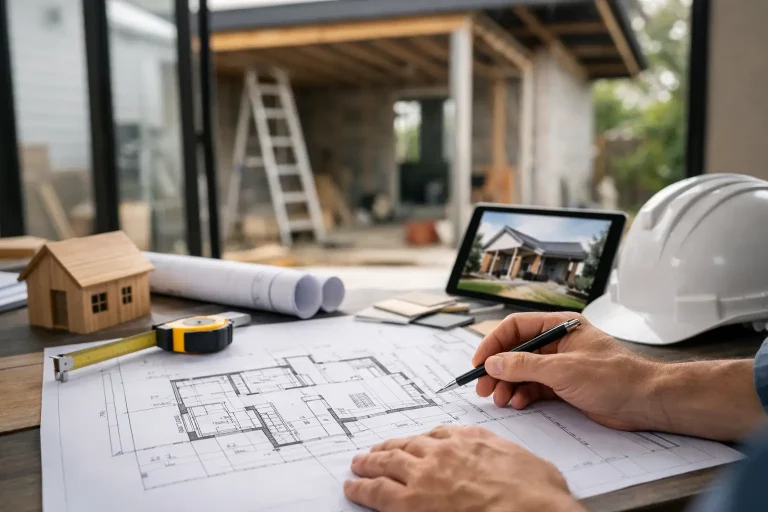

How to Choose Carpentry Subcontractors
A carpentry team can make your job run smoothly or turn every stage into a chase-up. That is why knowing how to choose carpentry subcontractors matters long before the first frame goes up or the first fix starts. Whether you are a builder lining up trades for a new project or a homeowner planning a renovation, the right subcontractor should give you confidence early – not excuses later.
Why choosing the right carpentry subcontractor matters
Carpentry touches more of a project than many people realise. It affects structure, finish quality, sequencing, site safety and how well other trades can move in behind. If the carpentry is late, messy or inconsistent, every downstream trade feels it.
For builders, a poor subcontractor choice usually shows up in programme blowouts, supervision headaches and rework. For homeowners, it tends to feel like unclear communication, rising stress and a result that never quite looks as good as promised. Price matters, but reliability, workmanship and follow-through usually cost less in the long run.
That is the first shift to make when thinking about how to choose carpentry subcontractors. You are not only comparing hourly rates or quote totals. You are assessing who can deliver the scope properly, communicate clearly and stay accountable when the job gets complicated.
How to choose carpentry subcontractors without getting burned
A lot of people start with the quote. Fair enough. But the better place to start is fit.
Not every carpenter is set up for every kind of work. Some crews are strong on framing but weaker on detailed fit-out. Some are fine for small residential jobs but struggle on larger multi-res projects where sequencing, documentation and site coordination matter. Others are capable tradespeople but poor communicators, which becomes a problem fast once there are variations, access issues or tight deadlines.
The best subcontractor is not the cheapest or the one with the flashiest sales pitch. It is the one whose experience, systems and standards actually match your project.
Look for relevant experience, not just years in the trade
Years on the tools matter, but relevant experience matters more. A team that has spent years doing maintenance work is not automatically the right fit for a full carpentry package on a custom build. In the same way, a crew used to volume work may not suit a renovation where detail, care and communication with occupants are part of the job.
Ask what kinds of projects they complete most often. Frames, lock-up, fix and fit-out all require different strengths. If you need end-to-end support, check that they genuinely handle the full sequence rather than piecing it together through others.
For homeowners, this matters because renovation carpentry often involves working around existing structures, liveable spaces and hidden surprises. For builders, it matters because site rhythm depends on a subcontractor who understands how to hold programme and hand over cleanly to the next trade.
Pay attention to how they communicate early
One of the easiest ways to predict how a subcontractor will perform is to watch how they handle the early conversations. Are they clear when discussing scope? Do they ask sensible questions? Do they call back when they say they will? Can they explain what is included, what is excluded and where they see risks?
Good communication is not a bonus feature. It is part of competent project delivery. A dependable carpentry subcontractor should be able to flag issues early, confirm details in plain language and keep people informed without needing to be chased.
If the quoting stage is vague or slow, there is a fair chance the job stage will be too. That does not mean every busy contractor who takes a day to respond is a problem. It does mean patterns matter.
Check the quality of the quote, not just the number
A well-prepared quote tells you a lot about how a subcontractor runs their work. Clear scopes, sensible allowances and realistic timeframes are all good signs. Thin quotes with broad assumptions can look cheaper upfront, then become expensive once missing items start appearing as variations.
This is where trade-offs come in. The lowest quote may be based on limited inclusions, lower supervision or unrealistic labour assumptions. A higher quote may include proper site coordination, better detailing and cleaner handover. Neither is automatically right or wrong, but you need to understand what you are comparing.
For builders, consistency in quoting helps with forecasting and client communication. For homeowners, it reduces nasty surprises halfway through the build.
What to check before you commit
Licensing, insurance and compliance
This should be basic, but it is still worth confirming. Make sure the subcontractor has the right licensing where required, current insurance and a professional approach to compliance. You do not want to discover gaps once work has started or, worse, after something has gone wrong.
Beyond paperwork, look at whether they operate like a business rather than just a person with tools. That includes site processes, safety awareness and a clear understanding of responsibilities.
References that tell you something useful
References are only helpful if you ask the right questions. Instead of asking whether someone was happy, ask what the subcontractor was like under pressure. Did they stick to programme? How did they handle defects or changes? Was the site kept orderly? Did they need constant supervision?
Builders should ask other builders or supervisors if possible, because they will often give a more practical read on reliability. Homeowners should ask about communication, cleanliness, respect for the home and whether the final result held up well over time.
Past work that matches your standard
Photos help, but they only go so far. If possible, review completed work that is similar in type and finish level to your project. A structural package for a new build is different from detailed interior fit-out. A straightforward investment property renovation is different from a high-spec family home.
You are looking for consistency, not one standout project. Clean lines, good alignment, tidy finishes and obvious care all matter. So does the less glamorous side of quality – things being square, solid and built to last.
Red flags people ignore too often
Some warning signs are obvious. Others get waved away because the quote is cheap or the start date sounds convenient.
Be cautious if a subcontractor is hard to pin down on scope, unwilling to provide references or constantly blames past clients for project issues. The same goes for crews that overpromise on speed without explaining how they will resource the job. Fast is useful. Unrealistic is expensive.
Another red flag is inconsistency between what is said and what is written. If verbal promises do not appear in the quote, assume they are not included. Clarity protects everyone.
For homeowners especially, be careful with anyone who makes a renovation sound too simple before seeing the full picture. Existing homes always have variables. A good operator does not create fear, but they do respect reality.
Builders and homeowners should assess different things
The core principles stay the same, but the emphasis changes depending on who you are.
Builders usually need subcontractors who can slot into a larger process, manage labour properly, maintain programme and produce work that does not create issues for following trades. Responsiveness, documentation and site discipline carry real weight here.
Homeowners often care most about trust, communication and the ability to keep a project feeling manageable. That makes sense. If trades are working in or around your home, professionalism is not just about the finished carpentry. It is also about punctuality, respect, cleanliness and being straightforward when problems come up.
A good subcontractor should be able to deliver both solid trade work and a professional working relationship. That combination is rarer than it should be, which is why it is worth taking your time during selection.
The best choice is usually the one with the least friction
When people think about quality, they often picture the final finish. That matters, of course. But the strongest carpentry subcontractors usually stand out much earlier. Their quotes are clear. Their communication is steady. Their experience fits the work. Their references sound consistent. They do what they say they will do.
That kind of reliability removes friction from the whole project. Builders get a trade partner who helps hold programme and standard. Homeowners get a team they do not have to second-guess. In both cases, the value is bigger than the line item on the quote.
If you are weighing up options, trust the signals you see at the start. Good subcontractors tend to make the process feel organised from day one, and that is usually a strong sign the job will finish the same way.